

وصف الدورة:
فهم وتطبيق الإطار النظري والإطار المفاهيمي في البحث العلمي
تهدف هذه الدورة إلى تمكين طلاب الدراسات العليا والباحثين المبتدئين من فهم وتطبيق الإطارين النظري والمفاهيمي في أبحاثهم بطريقة عملية ومنظمة.
تجمع الدورة بين الأساس الأكاديمي الصلب والتطبيق العملي خطوة بخطوة، لتساعد المتدرب على الانتقال من مرحلة الفكرة إلى بناء إطار بحثي متكامل قابل للتطبيق.
محتوى الدورة
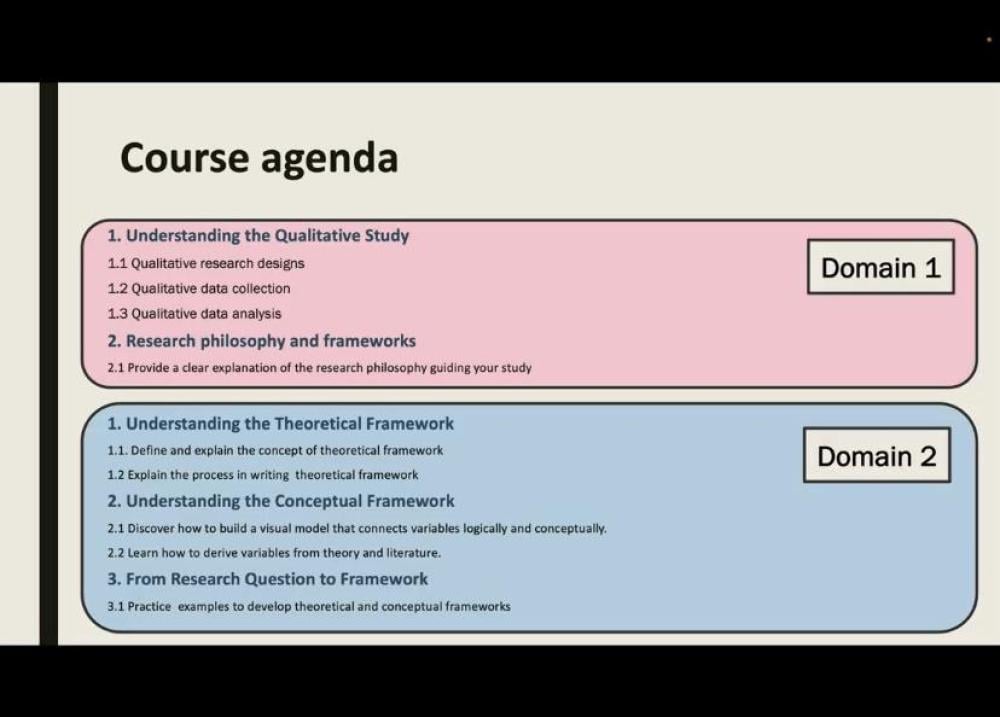
تتكون الدورة من محورين مترابطين:
- المحور الأول : فهم الدراسات النوعية وفلسفة البحث العلمي
مقدمة في التصميمات النوعية المختلفة وأساسيات جمع وتحليل البيانات.
التعرف على الفلسفات البحثية وكيفية ارتباطها باختيار التصميم والمنهج
(Positivism, Interpretivism, Constructivism, Critical).
فيديو تطبيقي إضافي يشرح تحليل البيانات النوعية بدءًا من الترميز وصولا الى كتابه النتائج
- المحور الثاني : الإطار النظري والإطار المفاهيمي
شرح واضح لمفهوم الإطار النظري: تعريفه، أهميته، وكيفية كتابته باستخدام أمثلة بحثية.
تبسيط مفهوم الإطار المفاهيمي: الفرق بينه وبين الإطار النظري، وخطوات بنائه من سؤال البحث إلى تحديد المتغيرات والعلاقات.
تطبيق عملي شامل يوضّح كيف يتم الانتقال من سؤال البحث إلى بناء الإطارين النظري والمفاهيمي في دراسات نوعية وكمّية.
مرفقات الدورة
ملفات رود تحتوي على أوراق عمل جاهزة للتطبيق العملي.
فيديوهات توضيحية وشرح واقعي لأمثلة بحثية حقيقية.
بنهاية الدورة سيتمكن المتدرب من:
التمييز بين الإطار النظري والمفاهيمي وفهم العلاقة بينهما.
اختيار الإطار المناسب وفق نوع الدراسة (نوعية أو كمية).
ربط فلسفة البحث بالإطار المستخدم.
بناء إطار بحثي قوي يدعم أهداف الدراسة ومنهجها.
تحليل البيانات النوعية وعرض النتائج بطريقة علمية.
Course Description
Understanding and Applying Theoretical and Conceptual Frameworks in Research
This course is designed to help postgraduate students and early-career researchers understand and apply theoretical and conceptual frameworks effectively in their research projects.
It blends academic depth with practical guidance, enabling participants to move confidently from an initial idea to a complete research framework.
Course Structure
The course is organized into two main domains:
Domain 1: Understanding Qualitative Research
Introduction to qualitative research designs, data collection, and data analysis.
Overview of research philosophies and paradigms (Positivism, Interpretivism, Constructivism, Critical) and how they guide methodological choices.
Additional video on how to analyze qualitative data, from coding to writing the final results.
Domain 2: Theoretical and Conceptual Frameworks
What is a theoretical framework? Definition, importance, and how to write it with real research examples.
Understanding the conceptual framework: key differences, how to construct it from the research question, and mapping variable relationships.
A full practical walkthrough showing how to move from research questions to building both frameworks in qualitative and quantitative examples.
Additional video on how to analyze qualitative data, from coding to writing the final results.
Course Materials Include:
Editable Word templates and working sheets for guided practice.
Instructional videos and applied demonstrations from real studies.
By the end of this course, participants will:
Understand the difference and connection between theoretical and conceptual frameworks.
Select and apply appropriate frameworks for qualitative or quantitative studies.
Link research philosophy to framework design.
Build a strong, coherent framework that supports their study’s purpose
Conduct qualitative data analysis and present results effectively.